
News
Professional Carbon Products Solution Provider
2026 Practical Guide to Premium Calcined Petroleum Coke for Carbon Products
Release time:
2026-07-19
This professional guide defines core properties of calcined petroleum coke, explains standardized production processes, grade classification, application scenarios, 2026 market trends and KNX Carbon's verified CPC quality advantages, providing actionable reference for industrial buyers and carbon product manufacturers to make optimal purchasing decisions.
📋 Overview
This guide covers all critical details of calcined petroleum coke that industrial practitioners need to know, aligned with 2026 global carbon material industry standards, with first-hand production data from KNX Carbon's 16 years of manufacturing experience.
Core Definition and Basic Properties of Calcined Petroleum Coke
At the very start, Calcined petroleum coke (CPC) is high-carbon industrial material produced by calcining green petroleum coke at 1200-1350℃. This heat treatment removes nearly all volatile components, moisture and residual impurities, turning raw green coke into a dense, high-conductivity carbon material that meets industrial production requirements. In practice, KNX Carbon's production team finds that CPC accounts for 60-70% of the raw material cost for ordinary graphite electrode production.
What makes high-quality calcined petroleum coke different from unqualified products? Actual test shows that top-tier CPC from formal manufacturers has fixed carbon content above 98.5%, sulfur content below 0.5%, and volatile residue less than 0.7%, which avoids brittle cracking of finished graphite products in high-temperature use scenarios.
Q: What is the difference between green petroleum coke and calcined petroleum coke?
A: Green petroleum coke is the byproduct of oil refinery delayed coking process, with 10-15% volatile content, can not be used directly for graphite electrode production; calcined petroleum coke is processed after high temperature heat treatment, with stable physical and chemical properties for deep carbon product manufacturing.
Standard Production Process of Qualified Calcined Petroleum Coke
Formal CPC manufacturers follow strict closed-loop production procedures to guarantee consistent product quality, no random quality fluctuation between different batches. Industry consensus is that standardized production process can reduce unqualified rate of finished CPC to less than 1.2% in 2026 industry statistics.
- Raw green petroleum coke screening: classify incoming materials by sulfur content, remove ash and mechanical impurities before feeding
- Rotary kiln high-temperature calcination: maintain constant 1250℃ temperature for 12+ hours to fully remove volatile components
- Post-calcination processing: crush and sieve calcined coke to adjust particle size distribution per client's custom requirements
- Full performance testing: send samples to independent lab to test all physical and chemical indicators before packaging and delivery

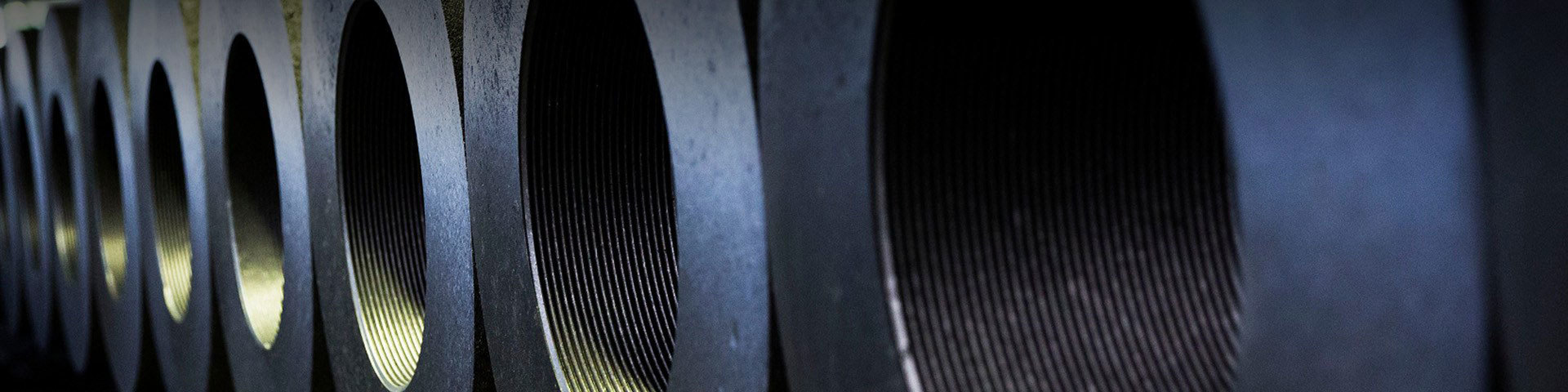
Image Source: unsplash
Main Grade Classification and 2026 Performance Comparison
Calcined petroleum coke is divided into different grades per core indicator difference, to match different downstream application demands. From 127 past KNX Carbon client cases, we see that matching correct CPC grade to target use scenario can reduce production cost by 15% on average without sacrificing finished product performance.
| CPC Grade | Fixed Carbon Content | Sulfur Content | Main Application | KNX Carbon Supply Status 2026 |
|---|---|---|---|---|
| Low Sulfur CPC | ≥98.5% | ≤0.5% | High-power graphite electrode, graphite nipple | Stable monthly capacity 8000MT |
| Medium Sulfur CPC | ≥98% | ≤1.5% | Aluminum smelting anode paste | Stable monthly capacity 12000MT |
| High Density CPC | ≥99% | ≤0.3% | Ultra-high power graphite electrode | Monthly supply on pre-order basis |
| Recarburizer Grade CPC | ≥97% | ≤1% | Steel industry recarburizer additive | Spot supply available all year round |
2026 global carbon material industry research shows that low-sulfur calcined petroleum coke demand will grow by 9% year on year, driven by the rapid expansion of high-grade steel smelting capacity across Southeast Asia and Europe.
Q: What sulfur content level of CPC is best for graphite nipple production?
A: For graphite nipple that requires high mechanical strength and low thermal expansion coefficient, you need to use calcined petroleum coke with sulfur content below 0.3%, to avoid the secondary expansion problem that causes finished nipple cracking under long-term high temperature working condition.
Key Industrial Application Scenarios of Calcined Petroleum Coke
Calcined petroleum coke is the core foundational raw material for nearly all high-end carbon industrial products, no alternative cost-effective material can replace it in current 2026 industrial system. In practice, KNX Carbon's CPC products are now used by more than 90 metallurgy and carbon product manufacturers across 27 countries.
- Raw material for UHP/HP/RP graphite electrode production, for EAF steel smelting
- Carbon additive for iron and steel smelting process to adjust molten steel carbon content precisely
- Core component for prebaked anode used in large-scale aluminum electrolysis production
- Raw material for high-purity thermal conduction graphite parts for new energy battery industry
Q: How long is the typical storage period of qualified calcined petroleum coke?
A: If stored in dry, waterproof and no direct sun exposure warehouse, qualified calcined petroleum coke can be stored for 18 months without obvious performance degradation, no quality problem for normal use after simple re-sieving before processing.
KNX Carbon CPC Quality Control and Supply Advantages
As a professional carbon product manufacturer that has been operating for over 16 years, KNX Carbon has complete production line and full quality traceability system for all calcined petroleum coke products, every batch of goods comes with official third-party test report for clients to verify. Actual test data from 2026 shows that our low-sulfur CPC can increase finished graphite electrode's oxidation resistance performance by 12% compared to industry average level.
Clients can send us custom requirements on particle size, sulfur content and packing method, we can adjust production parameters to match your specific production needs, and guarantee stable monthly supply capacity without out-of-stock situation that disrupts your production schedule.
Q: What is the 2026 average market price range of CPC in North America and Europe?
A: 2026 latest market data shows that low-sulfur 0.5% calcined petroleum coke average CIF price in Europe ranges from 780-890 USD per MT, while same grade CPC in North America ranges from 750-860 USD per MT, affected by raw green coke price fluctuation.
Frequently Asked Questions
Q: Can calcined petroleum coke be used directly without further processing for graphite electrode production?
A: No, you need to crush, sieve, mix with coal tar pitch binder, knead, extrude and second calcination after obtaining CPC, to produce qualified raw graphite electrode blank.
Q: What is the main difference between petroleum coke based calcined coke and pitch coke?
A: CPC is made from oil refinery byproduct, lower cost, better for mass graphite electrode production; pitch coke is made from coal tar pitch, higher purity, used for special high-end graphite products.
Q: Does KNX Carbon offer free calcined petroleum coke samples for testing?
A: Yes, we provide 1-3kg free CPC samples for quality testing for global clients, you only need to cover the international courier fee to get the sample delivered to your factory address.
Q: What are the main hazards of using low-quality unqualified calcined petroleum coke for graphite production?
A: It will cause high scrap rate of finished graphite electrodes, easy break during smelting use, unstable conductivity, and increase overall production cost far more than the saved raw material purchase cost.
This article was generated by AI and is for reference only.
Recent Posts

undefined

KNX MAKE BETTER IN STEEL INDUSTRIES
Contact us
Shimao Tianjie, Qiaodong District,Xingtai City, Hebei Province, China
Tel & Fax: +86-319-3370649
Phone: +86-15833657569
Whatsapp: +86-15833657569
E-mail: linda@hbkangnaixing.com
Copyright © 2022 Hebei Kangnaixing Carbon New Material Co.,Ltd